Entrepreneurship
Finding Product-Market Fit for Your Startup
Thais Gonzalez
Oct 25 2023 · 2 min read


Lack of market need is the top killer for startups and every startup takes a different path to finding market fit. For some, it's a quick turnaround from the time they launch to their first customer. Others launch with an idea and find out through user feedback and an ever-changing tech landscape that they need to pivot and try again. No matter the timeline, it's a journey for all founders that requires patience and commitment to succeed in a competitive environment.
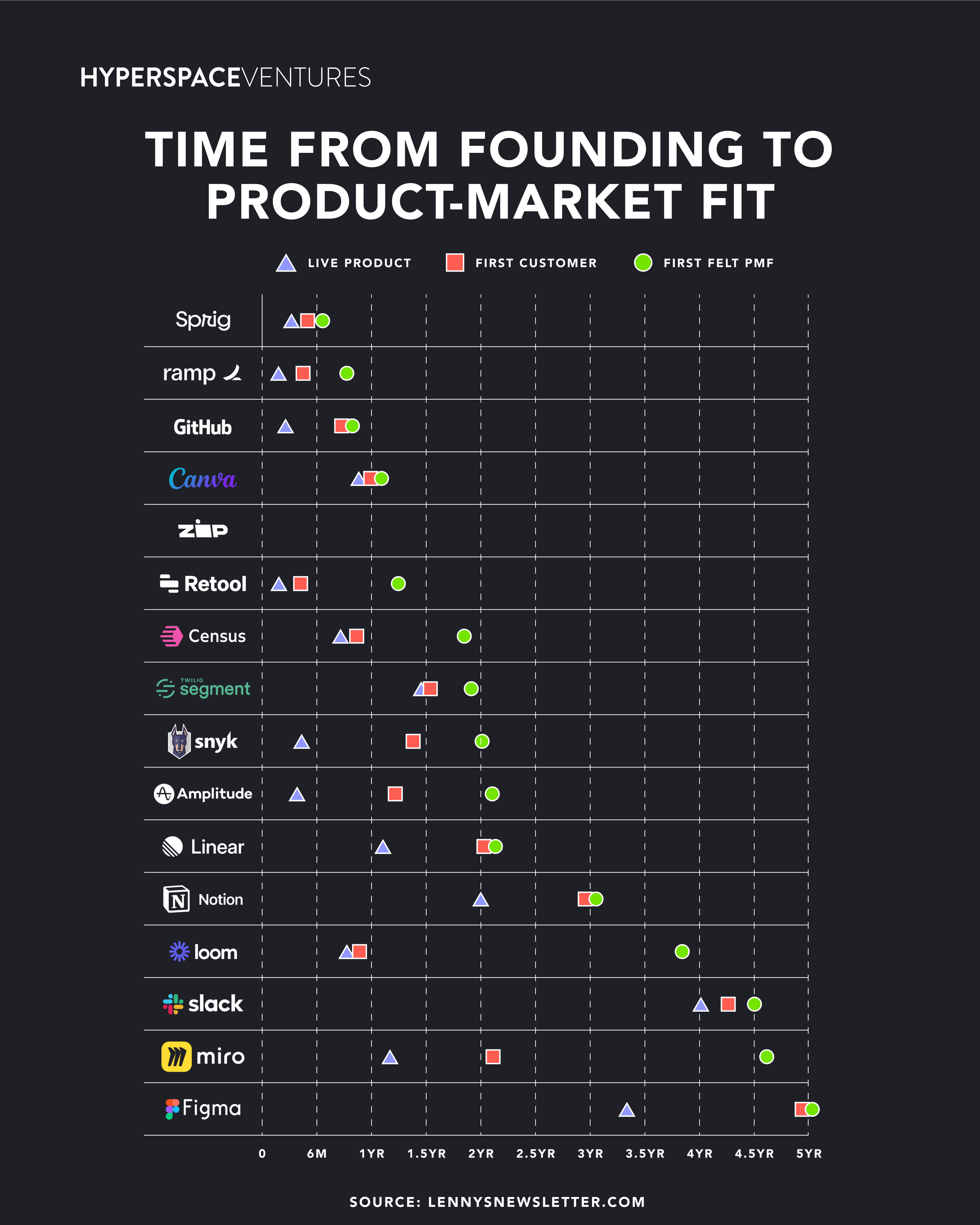
The stages we evaluate include initial launch, first customer, and first felt PMF. What do those stages look like for founders? At the time of initial launch, a founder is ready to go live with the product’s MVP. Ideally, we’ve created a pipeline of future v2 features, but there is flexibility in the road map for user feedback. The founder's goal is to get as much feedback as possible and funnel that into development, to further enhance the app to meet users’ needs. A key metric to focus on is the customer acquisition rate and whether or not they’re reporting a positive user experience. At the time of first customer, the company has successfully proven that they are solving a real pain point for customers and achieving a major goal - someone is willing to pay for the product. The focus begins to shift from not just acquiring new customers, but also retaining current customers. A high retention rate is an excellent indicator of product market fit and can be achieved by building trust with the customers and maintaining a customer feedback loop to power further innovation. Once your product experiences a high retention rate, and positive reports of customer satisfaction and loyalty, most startups can feel PMF.
Diving into some specific examples, let’s take a look at Figma. Figma launched in an extremely competitive landscape. Adobe had been the longstanding champion of design platforms and provided a very feature-rich user experience. As such, Figma had to develop those capabilities in order to compete with the features offered by Adobe. After a long development process, they launched their initial product with a “freemium” model and dedicated themselves to user acquisition and growth. Getting users to learn the platform and rely on it for designs was a slow process, but users fell in love with the well-built browser product that enabled real-time collaboration and it eventually became an essential tool for designers. Figma was able to capitalize on the customer loyalty and achieve high ARR once they transitioned to paid, leading to a quick time frame between first customer and first felt PMF.
In contrast, Sprig moved relatively quickly from launch → PMF. They launched their user insights platform, focused on providing immediate data analytics and results to customers. They also grew with the “freemium” model, offering a robust free account for smaller clients and paid accounts that offer slightly more features and support for larger clients. Their pricing model worked successfully, proving value to customers and garnering loyalty, resulting in a fast transition from launch to first felt product market fit.
There is no set guide or path to achieving PMF; it’s a unique journey for each startup. Oftentimes, even largely successful companies didn’t feel like they had achieved PMF, despite a consistent customer base. At Hyperspace, we believe in encouraging each of our partner’s unique journeys, every step of the way. Looking at the different paths these companies took to finding PMF is a great example of a quote from Rick Rubin, in his recent book The Creative Act, “If we’re aiming to create works that are exceptional, most rules don’t apply."